

Obedience Is Not a Virtue
Why compliance puts you at risk

Laws are useful only if they actually have a use for a given society, and are organically representative of that society; meaning, if enough people have skin in the game, and actually put their mouth where their mouth is in the application of each law.
Therefore, voting (especially through layers of supposed “representatives”) over things that shouldn’t be up for a vote — by people who have no stake or say in a given matter — is the worst possible way to make rules for a civilised society. Voting gives an entitled voice to people who should have no business in the affairs of others, plus a vote is anonymous and unaccountable — nobody is held responsible for bad policies.
Instead, laws without government are superior because they are decentralised, consent-based, and as fair as possible in their emergence and application. Read ‘Punishing criminals in the absence of a state’ for context, plus the reading list below.
For all the utilitarian arguments coming from state apologists, we also get a contradicting one: that “we should obey laws, even if they are stupid and useless, otherwise we risk descending into a chaotic society without any rules.”
Really?
But what of the opposite? What if “obeying stupid, oppressive, retarded laws just for the sake of it” risks descending into a tyrannical society where the ruling class does whatever the fuck they want? Imagine a world where they tax us to the bone so they can waste it on nonsense, wage war in our name with our money on any pretext they want, use our money to brainwash us to think they’re on our side, and lock us down and force-inject our kids with experimental compounds, all under the constant threat of nuclear annihilation and corporate-monopoly takeover. Sounds dystopian, right?
Oh, wait! It’s already here because the vast majority of people are too willingly naive to realise that blind obedience “to avoid risk” is the most risky thing they can do.
Why?
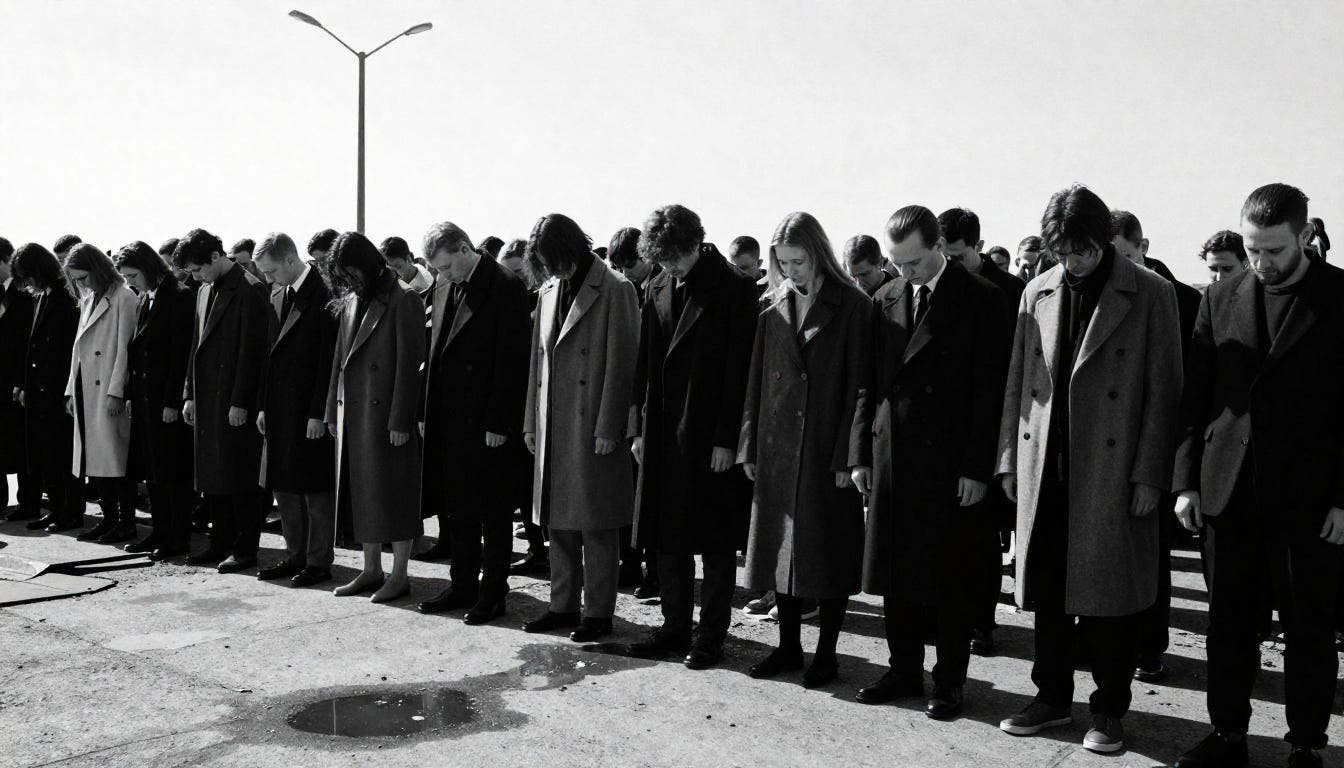
Because giving in and backing down puts you in a weak position, one inviting exploitation. Obedience is not a strategic retreat, nor a timely and reluctant submission until the opportunity to defy. Justifying obedience for the sake of obedience — as if obedience were a “virtue” — is willing, internalised subservience by people begging to be tyrannised.
If obedience is your thing, don’t complain when you are oppressed; you get exactly what you asked for.
Brilliant reframe on the compliance trap. The idea that obedience itself invites tyrany rather than preventing chaos is spot on, especially in the context of how 2020-2022 unfolded. I've noticed that in organzational settings too, the most exploited teams are always the ones that never push back, which just creates a cycle where management keeps adding more nonsense because there's no cost to doing so. The decentralzed law concept is interesting though practically dunno how disputes get settled without some enforcement mechanism that doesn't devolve into might-makes-right.