

Losing hope, part 3
Freedom in cynicism

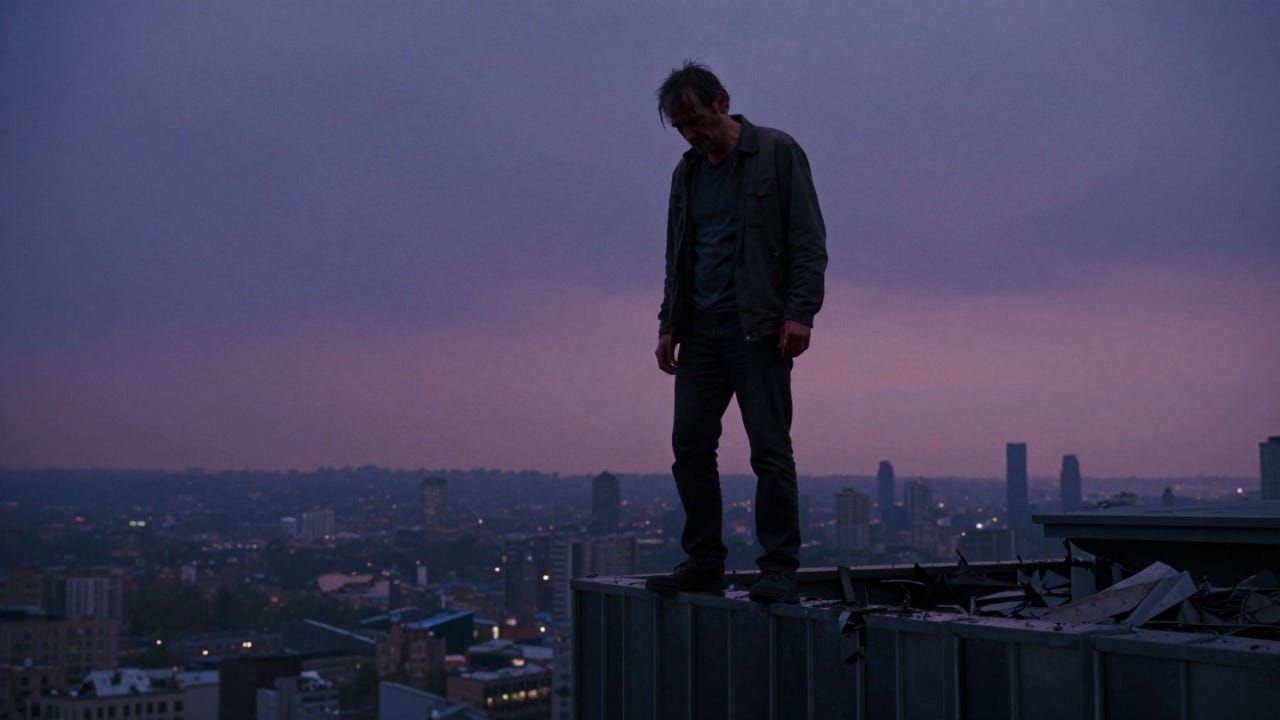
For as long as I can remember, people told me I was too hard on myself, as though they knew where the line for me was between being lenient and being unforgiving. But my expectations of myself were a direct reflection of my dreams. The harsh standards I held myself against were the magnitude and shape of the shadow cast by my hopes. Had I been cynical from the start — had I been hopeless and uninspired, and not dared to dream — I would have been content in lowliness and mediocrity.
Introduction
Hope, even false hope (especially so), can be useful. I admit that. Hopeful delusions give you the strength to keep going, even if you’re going nowhere. It feels good in the moment to journey on with the high expectations of a fine destination, even if you’re unaware of the tragic irony that, in fact, the destination is beyond your reach.
Hope — unfounded or otherwise — may grant you supernatural drive… until you realise (and admit to yourself) it was false hope all along.
When hope proves to have been foolish, you lose more than you gained from the delusion of hope; the disappointment and disillusionment become learned helplessness and an accumulated proof of inefficacy.
You begin to distrust your abilities to discern reality, let alone succeed in any new endeavours. You identify more with your fall than with your desire to succeed.
And then you get those toxic (de)motivators accusing you of “freely choosing to fail”. They do this to kick you when you’re down, to fool you into identifying with your failures, rather than giving yourself credit for fighting and losing, despite having done everything right, despite going against all odds.
This is the underlying evil of those who insist on “free will”: they want you to assume you deep down wanted your failures, so that you define yourself by your failures.
Ironically, nothing breeds fatalistic determinism more than the psychosis of “free will”. Instead, separating yourself from your failures (accepting responsibility without self-blame) is true accountability.
It is possible to commit no mistakes and still lose.
That is not a weakness; that is life.
— Jean-Luc Picard, Star Trek TNG
Hope dynamics
In the rare occasion where hope proves to have been warranted, and you win, then fair enough; let’s give it for hope! It’s more probable to win the lottery, though. Some do win at some point, but the vast majority don’t. And even if you do win, it was still the wrong choice to play.
Here are the benefits of losing hope:
You don’t expect anything, so you’re not needy, and you’re thus more likely to achieve. When you are attached to an outcome, you become desperate and insecure. Yes, hope energises you, but at the cost of your calm, your balance, your focus, just like an overly-aggressive fighter in the ring. I remember a quote from a fighter (I think it was Fedor Emelianenko) along the lines of: “Before entering the ring, I’m prepared to die”. This means he is prepared to lose, and to be prepared to lose, you cannot be driven by wishful thinking or hope. He’s not desperate to win, so he’s OK with the worst possible defeat. Thus, he’ll be calm, loose, and nimble. And you see how stoic and calm Russian fighters tend to be; it’s what makes them good. In investing, it’s the same story: if you invest what you can’t afford to lose, you’re guaranteed to lose. Ever tried to talk to your crush over whom you obsess? Your calm goes out the window, you lose yourself, and you sound pathetic. It’s because you expect something from them and from life in general. Expectation equals hope. When you expect from life, you become dependent upon an outcome, and this is limiting and disempowering. And when you expect from people, you become needy and pathetic, and they sense it. Nothing is more unattractive than neediness. You therefore stand the least chance of getting what you want when you hope for it. Interview situations are the same. Try to apply for a good job while unemployed: your neediness reeks desperation, and they will not hire you. If you already have a good job, they’ll respect you, even if you bring fewer skills. If you don’t need it, you’re more likely to get it. When you’re needy, desperate to please and be liked, nobody will respect you. Hope breeds neediness.
Without hope, you have little or nothing to lose; therefore, you become dangerous. The more you hope for, the more submissive you become if it promises a manifestation of your hopes. A lion is dangerous when cornered, but not when he has hope of escaping, hopes of a cushion to fall back to. Reject the complacent safety of hope, and you become a beast.
Hope is a manipulation trigger. Look at the desperate, slave-like behaviour of voting. They always get your submission through hope. You always let politicians get away with lying to you again and again because, again and again, they offer you renewed and repackaged hope. And you willingly take it.
George Carlin says: “I lost all faith in the species and in my nation’s culture a long time ago. If you think there’s a solution, you’re part of the problem”, and someone in the background jokingly says: “How’s that bumper sticker selling”? You see the dynamic here?
Manipulators and oppressors get you with hope — hope they’ll one day reward you, hope they’ll spare you punishment, hope you’ll live in relative peace if you simply submit. But when you have no hope, you have nothing to lose, nothing to fall back on. When you are a cornered animal, there is no hope of stepping back. You are dangerous when you have nothing to lose, no hope to make you civilised.
I’ve seen horrible war footage in my life. One video stood out. It showed the execution of a Ukrainian POW by his Russian captors. Not taking any sides in yet another pointless war where slaves kill each other over the branding of their masters. But what struck me was this soldier’s defiance that came from hopelessness. He was surrounded by his captors, armed with itchy fingers on triggers. He knew he was dead; he nurtured no hope of getting out of that alive. So when they instructed him — at gunpoint — to say “Russia is great”, he, instead — defiant until the end — proclaimed the opposite: “Ukraine is great”, right before they sprayed him with 7.62-calibre rounds from a short distance. My point here is not petty nationalism and dying for less than nothing, for your sold-out rulers, no less. My point is that hopelessness gave him the power to stay defiant. He was free from the vulnerability of hope that would have otherwise rendered him submissive and manipulable. Who knows how many indignities he was spared thanks to his final realisation that there was no hope for him? Had he nurtured even the slightest hope of surviving, his captors would have made him jump through hoops and grovel in dirt. But refusal to indulge them offended them, so they got rid of him quickly.
The shitty book “Man’s Search for Meaning” by Viktor Frankl — yes, it’s a horrible book — preaches the opposite. It basically says: “Turn into a submissive slave by fostering deluded hope, even hoping against all odds, and in the process, selling out just to survive as empty shells of yourselves”. Sure, the alternative of hope may be death, but what if death is preferable? Is life worth living when you’re left without any dignity or integrity? Is it worth sacrificing your true self on the altar of mere survival? Is mere survival — not living — worth all that indignity?
There is always something worse than death: selling out and betraying your true self.
“All is lost, sold your soul in this brave new world”.
— Iron Maiden, Brave New World
Cynicism
Defining ‘cynicism’:
An attitude of scornful or jaded negativity, especially a general distrust of the integrity or professed motives of others.
A general lack of faith or hope in humanity — sceptical and scornful of positive expectations.
A logical response to disappointed expectations.
Without hope, you’re almost unbeatable. Positive expectations weaken you because they compel you to conform, to submit, to expect either rewards or avoidance of punishment. Heroes are made through hopelessness. Great acts of self-sacrifice aren’t carried out due to hope for something better; they are committed out of despair and a retreat to the true self. And if sacrifice is the price for being who you truly are, even for a split second, then so be it.
The only time you’re your true self is when you have no hope for something “better”. The “better” is often antithetical to what makes you ‘you’.
Hope censors you, tames you, pulls your reins towards a meaningless goal that is often misaligned with the values that define you. Perhaps the only meaningful goal in life is achieving your true self. And you cannot do that while pursuing and hoping for inferior goals, while cultivating hope for things outside of you.
Without the hope for the carrot, you’re unmanipulable. Without the hope of being spared the stick, you are unconquerable.
Life is one big set of false hopes. Give up. Let it be. Que será, será.
The more you dig for gold, the more you dig your grave. The more you struggle, the more the quicksand pulls. The more you fight, the more you lose.
You win the battles you don’t have to take. And when the battles are forced on you, you stand a better chance at winning when you’re prepared to lose, when you don’t hope, and therefore aren’t dependent on a favourable outcome.
What if Sisyphus were an allegory for hope — endlessly striving for nothing?
Without hope, you are free — free from fear, free from meaningless aspirations.
Without hope, you are free from the meaningless abuses of a meaningless life. Hope is what keeps us valuing a meaningless life. Hopelessness frees us from the greatest fear of all.
Without hope, you are free to be your true self, free to live, and free to die.
Hope is slavery.
Hopelessness is freedom.
Reversal
By all means, keep your hope, only if you know you stand a good chance of success.
Hope is mental currency: invest it wisely, only when the success you hope for is within reach.
If the odds do favour what you hope to achieve or what you anticipate happening, then, even if you fail, you’ll know it was a good gamble regardless. But don’t enter a casino, which represents an astronomically high probability of losing, while hoping to win. Casinos and stock brokers live on people’s delusions of hope.
Conclusion
But when the odds don’t reasonably back up what you want to happen, you’d be more empowered and more dignified without any hope for it. Not only that, but you could be maximising your chances of achieving something if you have no hope in achieving it, especially when hope makes you needy and desperate. Nothing disempowers you more than needy desperation.
And how to know the odds of something happening? An honest, humble appraisal of your abilities and a dispassionate pattern recognition might do the trick. You can’t be certain of anything, but all we can do is draw conclusions and make deductions from the information available to us.